

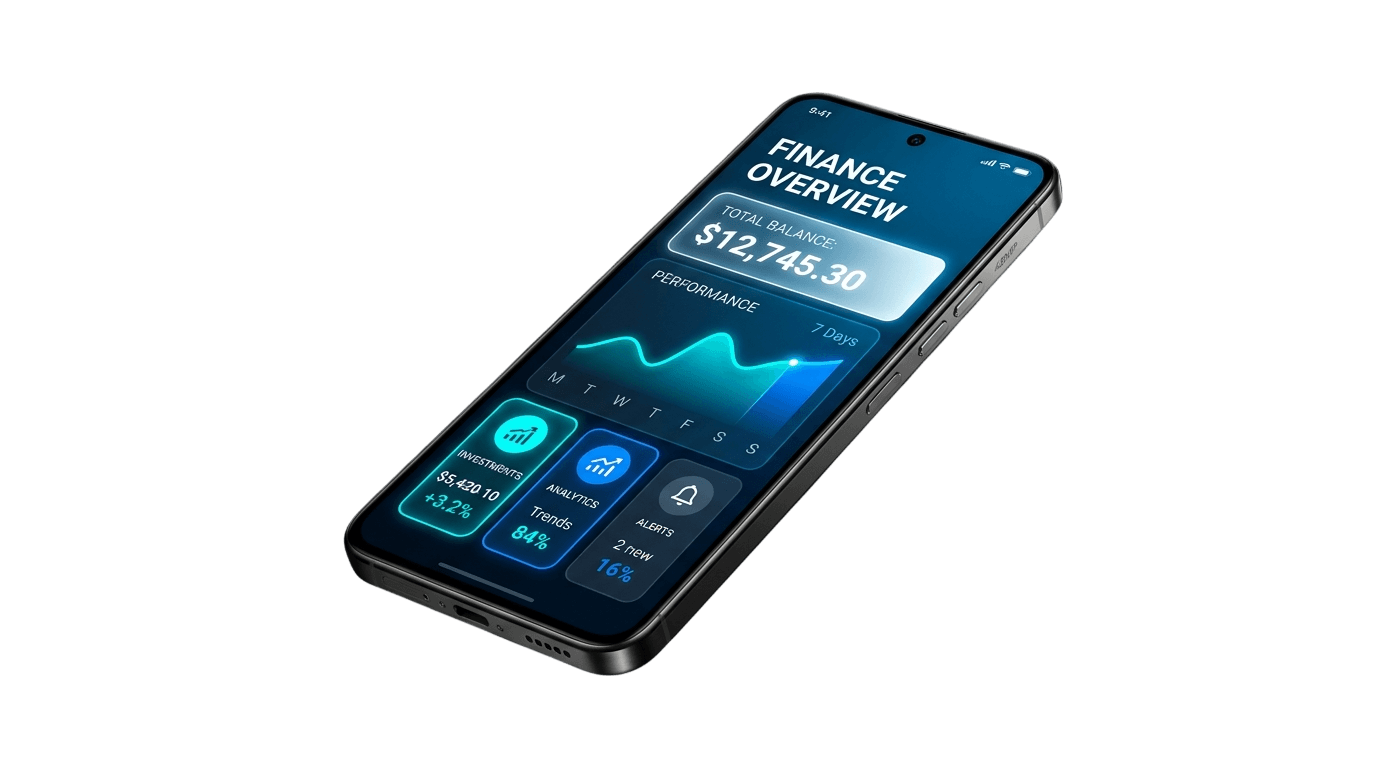
Mobile Engineering003
Native and cross-platform apps built for the conditions they ship into — offline state, background work and store review treated as requirements.
- iOS & Android builds
- Offline sync
- Release pipeline
- Crash reporting
Whether you're a rising startup or an established name, we engage this service the same way we engage every other one — a diagnostic before a proposal, and a shipped result measured against what we said it would do.
Service Overview
We build for the conditions a mobile app actually ships into: a network that drops mid-session, a background task the OS can kill without warning, and a store review process that rejects on details a web release never has to consider.
Offline state, background work and store compliance are treated as requirements from the first architecture decision, not as a hardening pass before launch — so the app that ships works the same on a train platform as it does on office wifi.
Client Goals
Give users a functioning app on a train platform or a basement, not a spinner and a retry button.
Ship an experience that feels native on both iOS and Android without maintaining two divergent codebases by accident.
Pass App Store and Play Store review without a rejection cycle eating a week of the release timeline.
What Every Engagement Gets
Four commitments that hold the same way on every project, regardless of scope or budget.
Offline-First Sync
Local state is the source of truth in the moment; the server reconciles when the connection returns.
Native Device Integration
Camera, location and push are wired through platform APIs, not a lowest-common-denominator plugin layer.
Startup Performance Budgeted
Cold-start time and frame budget are measured on real devices, not just a simulator.
Crash Reporting From Day One
Every release ships with monitoring already wired in, so a regression is caught before support tickets arrive.
Tech Stack
The same toolkit behind every service, chosen for the discipline it enables.

Cloud-native compute, declarative orchestration, and global edge routing engineered for zero-downtime scalability.

Type-safe, memory-efficient languages and low-latency runtimes selected for high concurrency, fast startup, and long-term maintainability.

Relational, document, and distributed event streaming datastores tuned for strict ACID guarantees, high throughput, and replication.

Production-grade vector indexing, evaluation harnesses, and cognitive retrieval pipelines backing intelligent enterprise systems.

Automated CI/CD pipelines, end-to-end testing harnesses, and real-time observability telemetry guarding production releases.
Questions on mobile work.
Against the product's actual constraints: device APIs, team skills, release cadence and performance requirements. We recommend one or the other with the trade-offs stated plainly, not whichever stack we happen to prefer building in.
Sync conflicts, stale caches and mid-session network loss are scripted as first-class test cases against real devices — not simulated on a stable office connection. The app is expected to behave correctly on a train platform, not just on wifi.
We do, as part of the release pipeline: signing, metadata, review guidelines and the rejection-cycle contingency are prepared before the first submission, so store review is a step in the process rather than a surprise at the end of it.
Yes — most mobile engagements start from an existing codebase. We audit crash rates, build health and architecture first, stabilise what is already shipped, then evolve it rather than forcing a rewrite the product does not need.
Technical briefingNot a sales desk